Learn more about technical and organizational aspects when preparing internally for an audit. In this guide, we’ll explore third-party security audits and provide helpful tips on communication, documentation, and risk evaluation.
<H2> What is a Third-Party Security Audit?
A third-party audit is a process for assessing an organization’s security posture and practices. It covers identifying risks, hazards, and potential threats, as well as ensuring regulatory compliance with security standards.
Audit findings and identified issues can then be converted into improvement recommendations to enhance overall security.
Risks associated with third-party vendors are quite common, as organizations leverage third-party products and platforms to scale. The problem is that data breaches often originate from third-party compromises, while many ransomware attacks often begin through external vendor access points.
This makes a third-party cybersecurity audit crucial, allowing for the assessment of a vendor’s security posture.
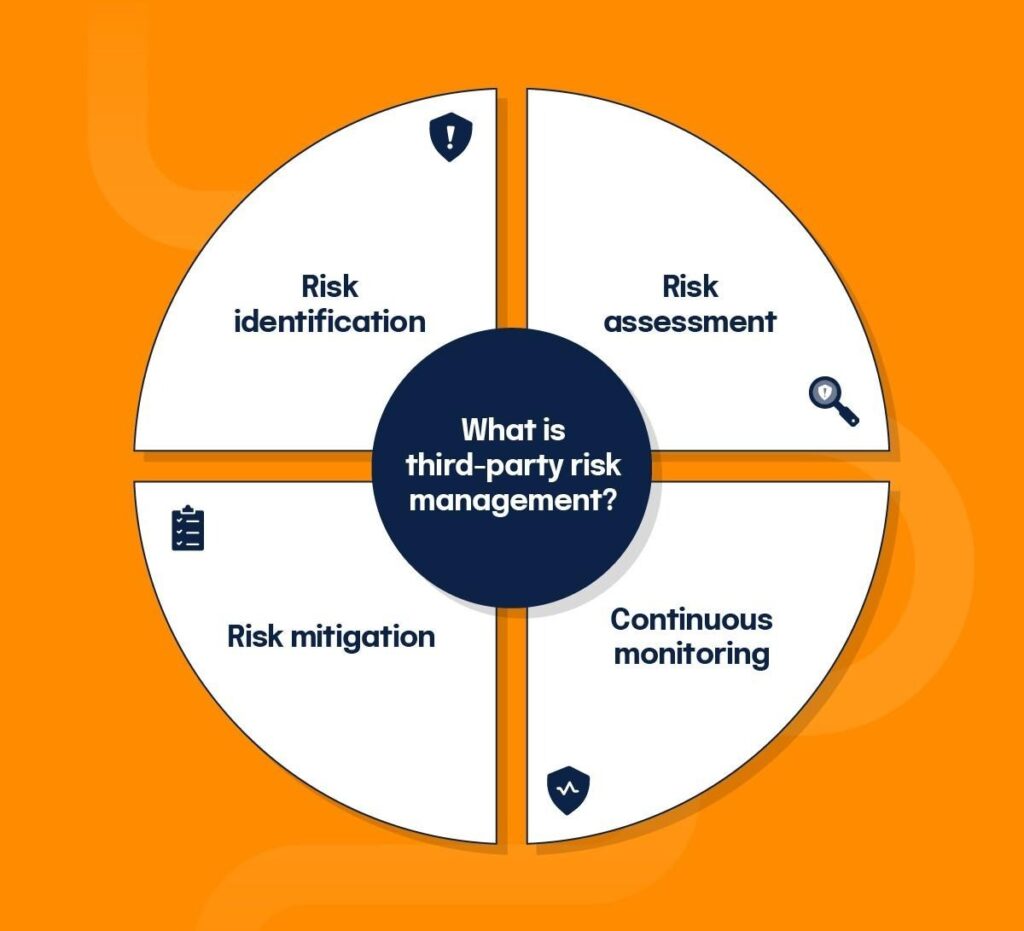
Third-Party Security Risk Management and Vendor Risk Management programs, which are important components of audits, enable the identification, evaluation, and management of risks, identifying security gaps. The reason many organizations undergo third-party audits is often to obtain certification for compliance with industry standards such as SOC 2, PCI DSS, or ISO. Although the audit process is time-consuming and complex, it is an excellent strategy for assuring potential clients that your business meets high industry-level security standards.
(Можна додати інфографіку такого типу, тільки тут по центру “Why Do You Need A Third-Party Audit?” і по боках Vulnerability Identification /// Customer & Partner Trust //// Regulatory Compliance /// Breaches & Fines Prevention)
<H2> The Importance of Third-Party Security Audits
With the constant emergence of new security threats and vulnerabilities, the issue of potential risks of breaches is crucial in the cybersecurity landscape. Third-party audits are a valuable approach for both organizations that use third-party resources and third-party vendors that provide their services/platforms for others.
By identifying vulnerabilities and gaps, audits enable a thorough risk assessment and provide recommendations to security teams on how to strengthen their security posture. Additionally, audits increase confidence in third-party vendor services if the audit is successful. Thus, it’s a win-win for both those who leverage and those who provide solutions.
Key reasons why third-party security audits are crucial include:
<H3> Supply Chain Attacks & Security Incidents
One of the key reasons audits are so crucial is that attackers often target vendors, viewing them as a gateway into larger organizations. Supply chain attacks are a common practice in this context. Even a single unpatched vulnerability in third-party services or platforms is enough to gain access across connected systems.
Security incidents often result from exploits at third-party access points. The goal of an audit is to evaluate the vendor’s security. It helps identify gaps and address vulnerabilities before they cause damage.
<H3> Regulatory Requirements
Compliance with standards and requirements is essential in data security. Standards such as GDPR, HIPAA, GLBA, CMMC, PCI DSS, and others are among the primary focuses of third-party cyber risk assessments to determine how a vendor protects, stores, and interacts with data.
For companies providing their solutions/platforms to other organizations, third-party security audits help avoid non-compliance, reputational damage, and significant fines. With security assessments, vendors can demonstrate due diligence to auditors and stakeholders, thereby enhancing trust in their brand and maintaining compliance.
<H3> Risk Management & Decision-Making
An audit helps validate the security posture and assess the level of risk it poses. By identifying gaps and receiving recommendations from the audit, vendors can take remediation measures and make improvements. In addition to risk management, this helps organizations interested in your services/platforms make informed decisions considering your security measures against current and evolving cyber threats.
<H3> Vendor Accountability & Performance Metrics
Another aspect of the audit is evaluating vendors against predefined metrics and security controls to ensure compliance with industry standards.
Audit results are essential factors that organizations consider when selecting a new vendor or reviewing their existing partners.
<H3> Business Continuity & Resilience
Vendor-related vulnerabilities can often lead to a domino effect, disrupting operations and affecting business continuity. A third-party audit allows for the assessment of a vendor’s resilience against cyberattacks before security breaches occur, providing organizations with crucial information when it comes to business continuity planning, especially in industries where uptime and data integrity are critical.
*CTA* Understand the Audit Scope and Requirements & Create a Comprehensive Audit Preparation Plan with Jappware
<H2> Benefits of Thorough Preparation
Thorough preparation is key when organizing any process. Properly planned steps and actions transform the audit from a stressful event into an opportunity to receive recommendations for improvement.
<H3> Identifying Vulnerabilities Before the Audit
By preparing in advance, you can discover and address vulnerabilities and security gaps before the audit begins, thereby avoiding unpleasant surprises and potentially damaging findings in the final report.
<H3> Reducing Audit Time and Costs
With organized documentation, security risk evaluation, as well as clear processes and coordinated actions, you can significantly speed up auditors’ work, reducing their billable hours and your costs.
<H3> Increasing Customer and Partner Trust
By successfully passing an audit with minimal issues, companies can demonstrate the reliability of their security practices and strengthen their reputation and trust, which is critical for building partnerships.
<H3> Improving Internal Security Processes
The preparation step requires systematizing security policies, procedures, and controls, allowing security teams to identify gaps in documentation and inconsistencies between actual practices and documented ones.
<H3> Reducing Compliance Risks and Legal Consequences
During the preparation phase, companies proactively ensure their systems comply with regulatory requirements. Compliance with standards such as GDPR, HIPAA, PCI DSS, and others helps avoid fines, lawsuits, and business interruptions.
<H3> Boosting Team Morale
A well-organized team feels confident during the audit, understands its roles and responsibilities, and this reduces stress, demonstrating the company’s professionalism.
<H3> Competitive Advantage in the Market
Successful audits and certifications (e.g., SOC 2, ISO 27001, etc.) open doors to enterprise clients who require proof of security posture. A strong audit result sets you apart from competitors without such certifications.
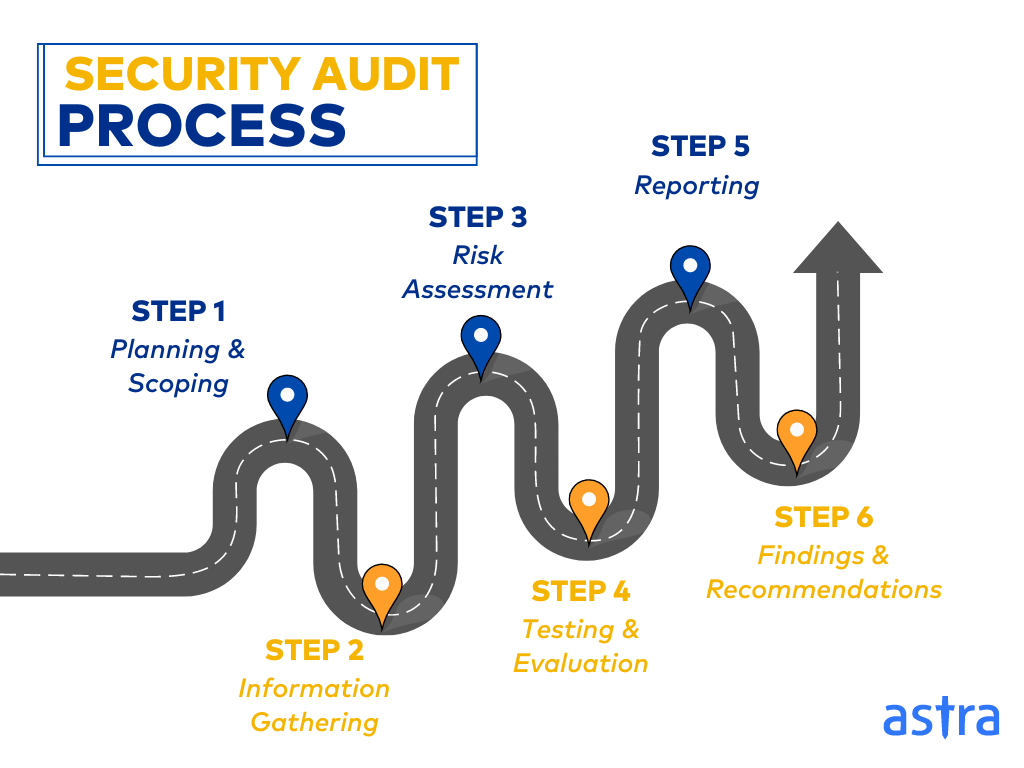
(По інфографіці можна додати такого типу. Адаптувати під Third-Party Audit Preparation з Step 1 Pre-Audit Planning and Scope Definition, Step 2 Communication і тд.)
<H2> Pre-Audit Planning and Scope Definition
Pre-Audit Planning and Scope Definition
The first step is to define the scope of the future audit. List all systems, applications, and infrastructure that will be included in the scope, determine what data is processed in each system, and identify critical business processes and their dependencies. Then agree on a timeline.
The next step is to select the standard and requirements and assemble the team. Determine the standard to be audited, such as PCI DSS, GDPR, ISO 27001, SOC 2, etc. It’s a good idea to obtain a requirements checklist from the auditor in advance and conduct a risk assessment to identify gaps. When assembling the team, appoint an audit coordinator and assign responsibilities for domains such as application, data, physical, and network security. Also include representatives from DevOps, InfoSec, Legal, HR, and Compliance.
<H2> Communication
When it comes to communication, it makes sense to divide it into three categories: internal communication, communication with auditors, and staff training.
- Internal Communication. Hold a kickoff meeting with all stakeholders in advance and create a dedicated channel for audit-related questions. Also, explain the importance and features of the audit to the team, and prepare a FAQ document with typical auditor questions.
- Communication with auditors. Agree on preferred communication channels and response times, as well as establish contact points for different types of requests. When planning communication with auditors, agree on an NDA and rules for handling sensitive data, and discuss an escalation procedure for critical findings. Finally, agree on a format for providing information.
- Staff Training. Conduct training for the technical team, so they know what to expect and how to answer questions. It’s also crucial to explain what to do if an issue is discovered during the audit. It’s helpful to prepare scripts for responses to typical questions in advance.
<H2> Documentation Readiness
Preparing security documentation is a complex step, as it requires attention to a wide range of documents, including security procedures and policies, technical and operational records, as well as HR and administrative documents.
The first step is to create a centralized repository and organize documents by category and standard. Ensure all documents are dated and version-controlled, check their relevance, and create an index document for easy retrieval.
- Policies and procedures of interest to the auditor include:
- Information Security Policy
- Acceptable Use Policy
- Incident Response Plan with examples of completed drill tests
- Disaster Recovery and Business Continuity Plans
- Change Management Policy with examples of change requests
- Access Control Policy
- Data Classification Policy
- Vendor/Third-party Risk Management Policy
- Password Policy
- Encryption Standards
Regarding technical documents, the areas of interest include data flow, network, architecture diagrams, as well as system and asset inventories, API documentation, backup and recovery procedures.
For operational records, prepare your access logs for the last 3-6-12 months (depending on the standard), change logs and deployment history, and vulnerability scan reports for the last year. If you conducted penetration testing, don’t forget to include the reports. Additionally, security incident reports and their resolution, employee training records, and background check records may be of interest to auditors.
Finally, compile a list of current employees with their roles and access rights, contracts with NDAs and security clauses, and security awareness training certificates, if any.
<H2> Technical Preparedness
Key technical aspects include your infrastructure, access management, application, data, network security, and compliance.
Conduct a vulnerability scan of all systems in scope and assess security risks to identify critical and high vulnerabilities. Additionally, update applications with the latest patches, check firewall and IDS/IPS configurations, and ensure logging is enabled everywhere and logs are retained for the required period. Don’t forget to check your backup systems and perform a test restore.
The next aspect is access management. Conduct a review to remove inactive users, verify compliance with the principle of least privilege, and ensure MFA is enabled. Ensure that former employees are deactivated on all systems.
Regarding application security:
- Conduct a code review
- Run a SAST/DAST scan
- Check dependency vulnerabilities
- Check API security, specifically authentication, rate limiting, and input validation.
- Test error handling to determine whether sensitive data is being disclosed
Regarding data security:
- Check encryption at rest
- Ensure encryption in transit (TLS 1.2+)
- Check database access controls
- Test data backup and restore procedures
- Ensure data retention and deletion procedures are in place
Regarding network security:
- Check network segmentation
- Check firewall rules to remove unnecessary ports
- Test your intrusion detection and prevention systems
- Check VPN configurations for remote access
- Ensure continuous monitoring of your network
<H2> Risk Evaluation
During a pre-audit cyber risk assessment, use gap analysis and conduct an internal mock audit to identify weaknesses. Additionally, evaluate each risk based on its likelihood of detection and potential impact, and compile a risk register that includes all identified issues. For prioritization, use the labels Low, Medium, High, and Critical.
Vulnerabilities labeled High and Critical require an immediate mitigation plan. For Medium threats, prepare compensating controls or a remediation plan; if there are vulnerabilities you cannot or do not have time to fix, prepare an honest explanation and an action plan.
The next step is a risk response plan. It’s a good idea to use the following matrix:
Risk—Root Cause—Current Control—Gap—Remediation—Timeline—Owner
Identify quick wins that can be implemented within a week. For complex findings, prepare a roadmap with realistic timelines.
Finally, compile a list of technical debt that can be seen by auditors and document compensating controls.
<H2> Pre-Audit Final Check and Launch
A final review should be conducted one to two weeks before the audit. This includes a walkthrough of all systems and security operations, and the availability of all documentation.
It’s also crucial to ensure everyone understands their roles. Mocking interviews with key personnel is among the best practices in this case. Also, check the team’s availability on the audit dates.
When preparing the audit environment, create read-only accounts for auditors where necessary. Verify that all demo environments are operational and prepare test accounts for demonstrations. If the audit is remote, set up screen sharing and remote access.
Additionally, create a communication plan for the audit. This includes a procedure for ad-hoc requests, an escalation path for urgent issues, and a template for tracking audit requests.
Prepare a tracking sheet for all auditor requests in advance, set up quick access to documents and systems, and have contact information for all responsible parties available.
A week before the audit, focus on the team’s mental preparedness. Remember that findings are primarily areas for improvement.
<H2> Post-Audit Process
Following the audit, it’s worth conducting a hot debrief immediately after completing fieldwork and collecting feedback from the team. Also, document all findings and observations.
The next step is to review the draft audit report to verify the factual accuracy of all findings and prepare responses to each. Then, establish realistic remediation timelines.
When creating the remediation plan, include:
- Description of finding
- Root cause analysis
- Timeline and milestones
- Responsible person
- Resources needed
- Success criteria
During the implementation phase, create a project plan for remediation efforts and assign clear ownership. Additionally, set intermediate checkpoints, conduct internal verification after remediation, and collect evidence to demonstrate compliance.
Then, update policies and procedures based on the audit and implement automated controls where possible. Focus on weaknesses identified by the audit and conduct additional training in problematic areas.
For reporting and communication, prepare an executive summary for management, present the remediation plan, and regularly update stakeholders on progress.
Preparing for the follow-up audit is crucial. Here, you should ensure that:
- You’ve saved all evidence of remediation
- You’ve documented the controls you’ve implemented
- You’ve prepared before and after comparisons
- You can demonstrate improvements
The final step is establishing ongoing compliance. Regular internal audits and continuous monitoring solutions are the way to accomplish it. Additionally, create metrics and KPIs for security posture, establish regular access reviews, and automate compliance checking.
<H2> Summary
An audit of your security posture and compliance by external security professionals is the best way to increase customer and partner trust in your organization by ensuring regulatory compliance and strengthening security measures in problem areas.
The audit provides a detailed report with identified vulnerabilities and recommendations for improvement, helping significantly reduce cybersecurity risks and prevent data breaches through robust system, network, apps, and data protection measures.
Preparing for the audit is key because the better you prepare, the higher your chances of passing it successfully. Contact Jappware to learn how you can navigate all audit steps smoothly.
<H2> Related Articles
How to Prepare Your Team for a Third-Party Security Audit – Jappware
Get your team ready for third-party security audits. Learn best practices for documentation, communication, and pre-audit risk evaluation.