Discover, monitor, and protect your public-facing digital assets from external threats and potential vulnerabilities with External Attack Surface Management (EASM). In this guide, we’ll look closer at EASM security and how attack surface management tools like SecurityScorecard can help businesses.
<H2> What Is EASM
EASM, or external attack surface management, is a practice aimed at identifying potential vulnerabilities and security gaps in an organization’s external attack surface. This includes monitoring public Internet-facing assets, public-cloud misconfigurations, exposed credentials, and other external assets and processes that can be exploited by threat actors. EASM helps strengthen security posture through a combination of penetration testing, vulnerability assessments, and automated scanning.
The main problem is that misconfigurations and improper security awareness expand an organization’s attack surface, opening the door to malicious actors. EASM solutions enable security teams to close security gaps, assess and manage vulnerabilities more effectively, and reduce risks in this case.
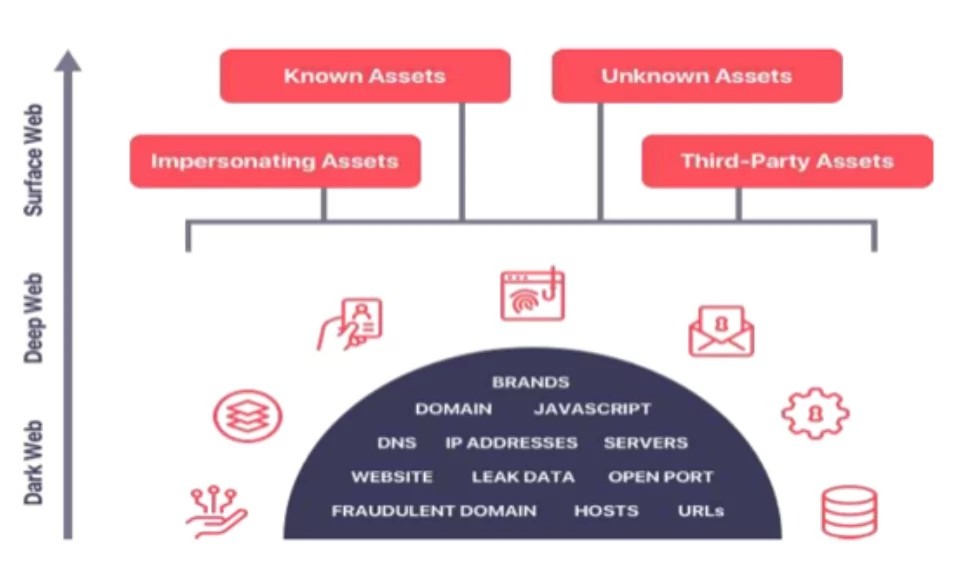
(по інфографіках можна додати щось такого типу:
<H2> How EASM Works
EASM works in such a way to ensure that an organization’s external attack surface is regularly and automatically monitored. All publicly accessible corporate assets are targets of interest. Once the asset identification step is completed, External Attack Surface Management (EASM) tools scan them for vulnerabilities, configuration errors, and other gaps. This is achieved by establishing unique fingerprints of discovered assets and identifying exposures on both known and unknown assets.
Threat intelligence and attack surface management capabilities provide ways to prioritize risk and identify potential attack vectors, allowing security teams to address risks and effectively remediate vulnerabilities before attackers exploit them, preventing data breaches.
EASM functionalities include:
- IT Asset Discovery for dynamic asset discovery
- IT Asset Management (ITAM) for automatic data capturing and refreshing, as well as asset ownership identification
- Vulnerability Risk Management (VRM) to prioritize risk and inform the security team
- Merger & Acquisition Due Diligence Assistance to assess the risk and determine next steps in due diligence
- Cloud Security Posture Management (CSPM) to identify weak configurations, policy violations, and compliance risks when it comes to cloud services
*CTA* Expand Your Attack Surface Visibility With EASM Solutions To Prevent Breaches & Maintain Compliance. Ensure The Security Of Your Public-Facing Assets With Jappware.
<H2> Internal vs. External Attack Surface Management
When discussing vulnerabilities and evolving threats, it’s essential to note that a business can be attacked in two ways: from the outside and from the inside.
The external digital attack surface refers to assets in your IT environment that are publicly accessible via the internet. In this case, an attacker can only attempt to exploit assets they can see. External Attack Surface Management (EASM) is a practice aimed at preventing this.
Internal Attack Surface Management (IASM) focuses on preventing breaches when someone within your organization’s perimeter has extensive access to corporate systems that are invisible from the outside. This practice focuses on identifying and addressing internal threats and vulnerabilities to prevent situations where attackers gain extensive access and privileges within the corporate network and systems.
<H2> Benefits of EASM
External Attack Surface Management (EASM) is an effective and valuable practice that promotes proactive security measures. Key benefits of EASM for businesses include:
<H3> Risk Reduction
Because EASM reduces the attack surface, this security approach enables overall risk reduction. By continuously monitoring and dynamically scanning potential threats or gaping vulnerabilities, EASM platforms and tools are among the best solutions for providing attacker-eye visibility; this way, security teams can close attack vectors before they are exploited.
<H3> Threat Intelligence
EASM platforms enable enhanced perimeter protection, resulting in rapid response and early detection of issues. Thus, EASM threat intelligence increases the ability to neutralize threats before they cause damage, including through expanded contextual alerting and telemetry.
<H3> Secure Cloud
Integrating EASM practices is an effective way to improve security and protect publicly exposed business assets. EASM helps identify and protect cloud resources from unauthorized access, misconfigurations, and third-party risks. By improving visibility into cloud assets and ensuring proactive protection and a comprehensive approach, External Attack Surface Management, combined with traditional methods, makes cloud services more secure.
<H3> Vulnerability Management
With a vulnerability management platform, organizations can act proactively. EASM gains visibility across all assets, allowing them to adapt their approach to current conditions as the modern IT perimeter continually expands. With expanded visibility and risk prioritization, security teams can close the door to attackers before they exploit old vulnerabilities or discover new ones.
<H3> Compliance
Because EASM is effective in identifying security gaps, it improves organizations’ compliance. By addressing vulnerabilities, misconfigurations, and gaps, the task of following the rules of both internal and external regulatory bodies is simplified.
<H2> Key Challenges of External Attack Surface Management
Each approach has its advantages, such as significant cybersecurity risk mitigation in the case of External Attack Surface Management (EASM). However, there are also challenges that organizations should keep in mind. Obstacles that businesses may encounter when integrating EASM solutions include:
<H3> Security Complexity
The increasing complexity of managing large volumes of data, which security teams must analyze to prioritize threats and plan actions, is one of the key challenges. This is because the implementation of new cybersecurity threat mitigation solutions complicates processes. Therefore, organizations need to find the optimal balance for the security products and tools they want to implement in order not to overcomplicate things.
<H3> Distributed IT Environments
With increasing reliance on cloud computing and remote work processes, IT environments are becoming more distributed. This naturally blurs the boundaries between public and private spaces, thereby complicating External Attack Surface Management. This results in a lack of visibility and control due to assets being scattered across different data centers, cloud providers, and third parties. Effective solutions to overcome this obstacle include a real-time, continuously updated asset inventory and automated scanning and monitoring.
<H3> Shadow IT
This challenge stems from the use of unapproved and unmanaged software, which is closely intertwined with Software as a Service (SaaS) tools and cloud services. While such solutions simplify many processes, they have their drawbacks, namely, reduced control and visibility. By integrating unmanaged tools, organizations can reduce the external attack surface, but the lack of control can lead to situations where security teams may be unaware of the existence of certain vulnerabilities and unable to fix them.
<H2> Why External Attack Surface Management Matters to the Business
EASM is important for preventing breaches and unauthorized access to sensitive data. An External Attack Surface Management approach is largely preventative, identifying and addressing threats, thereby preventing threat actors from opening the door by exploiting an organization’s external attack surface.
Each public-facing launch leads to the emergence of new attack vectors, so EASM solutions are critical in providing security teams with insight into what threats can be exploited and what solutions are needed to mitigate potential issues. EASM can leverage external threat intelligence from the post-perimeter attack surface, enabling more effective detection and prioritization of risks.
The value of EASM lies in proactive threat detection, which is made possible through:
- Constant monitoring & scanning
- Documentation & reporting
- Data collection & processing
- Enhanced communication across teams
The attack surface is a crucial factor that directly impacts security and business success. By providing external and proactive threat intelligence, EASM is key to preventive actions that go beyond a network perimeter, allowing both to minimize the risk of exploits and to strengthen a business’s exposure management strategy.
<H2> How EASM Tools Help
EASM tools provide visibility into the external digital footprint, helping organizations identify and monitor all exposed assets, including Shadow IT (known and unknown assets). This approach enables the assessment and management of potential vulnerabilities to reduce the attack surface.
By implementing EASM tools, businesses can continuously discover, monitor, and assess their public-facing assets to remediate vulnerabilities, misconfigurations, and other weaknesses before hackers can exploit them. The good news is that EASM platforms are designed to integrate seamlessly with existing security tools, expanding capabilities.
With EASM solutions like SecurityScorecard, organizations expand their opportunities. For example, through consolidation onto a single platform, which provides a unified dashboard for a complete and centralized view of an organization’s entire external attack surface. Also, with proactive alerts and automated workflows, security teams can streamline issue remediation by auto-assigning assets and issues, which is especially useful when dealing with Shadow IT. Finally, comprehensive data with attack surface APIs provides Attribution Confidence, Ownership Context, Remediation Trends, APIs, SSL certificate transparency, and more.
EASM tools aren’t just about identifying assets and externally viewing them, but also about bridging security and business gaps through a unified view of asset ownership, as well as implementing a proactive approach to cybersecurity.
<H2> Best Practices for Implementing EASM
The success of EASM implementation depends largely on the approach an organization takes. The most effective practices include the following steps:
- Establish a dedicated team. Establish a team responsible for EASM, including specialists in cybersecurity, asset management, and risk assessment. It’s important to define the roles and responsibilities of team members to ensure they carry out EASM tasks.
- Choose tools. Implement the tools and solutions that best suit your organization. It’s worth investing in tools that, in addition to asset discovery, vulnerability assessment, and penetration testing, also provide real-time monitoring and automation.
- Risk-based, asset-first approach. Prioritize your efforts based on risk assessment. It’s important to focus on critical assets first to protect those areas that most impact your business processes and operations.
- Security-first culture. Security awareness is essential. It’s crucial that all employees understand what is and isn’t allowed. Conducting training to educate staff about EASM and the secure environment is a key step.
- Keep your team updated. Your team should be well-informed about security intelligence. This includes threat intelligence feeds, collaboration with industry peers, security conferences, and other ways to learn more about emerging threats, vulnerabilities, and EASM challenges.
<H2> Why Work with Our Team
An organization’s cybersecurity strategy is a key factor influencing the success and even survival of a business. Any security gaps and vulnerabilities that aren’t promptly fixed are entry points for attackers, who can exploit them to access data.
External Attack Surface Management is an essential component of a security posture, enabling scanning and identifying vulnerabilities. By partnering with Jappware, organizations can implement solutions to reduce their attack surface. Our team consists of seasoned professionals with cybersecurity expertise, helping businesses securely and seamlessly integrate new tools into existing systems and ensure their stable operation.
Planning any project and steps with Jappware is always tailored to the specifics of your organization, ensuring the implementation of customized solutions that take into account your particular processes, needs, and goals. Reduce your digital attack surface and close security gaps to protect yourself from breaches by starting your projects with Jappware.
<H2> Summary
The continuous expansion of digital IT infrastructure brings a number of advantages to organizations. However, each expansion complicates the visibility of publicly accessible assets, which increases the attack surface and elevates risks.
External Attack Surface Management is an effective way to ensure cybersecurity by implementing solutions that monitor, remediate, and uncover vulnerabilities and security gaps. This enables continuous discovery of potential external entry points that attackers could exploit.
EASM is a strategic approach that helps prevent data breaches, reduce risks, and ensure regulatory compliance. By following best practices to successfully integrate External Attack Surface Management, as well as collaborating with development teams experienced in building security posture, businesses gain the ability to act proactively, preventing attacks while flexibly configuring new tools and solutions to fit the specifics of their operations and workflows.
What Is External Attack Surface Management & Why It Matters
Understand what is external attack surface management and why modern businesses rely on it to detect, prioritize, and mitigate security risks.